Looms Management System – Textile ERP
Production management ERP for textile manufacturers — digitising loom operations, worker salary computation, and real-time production tracking.
View Live System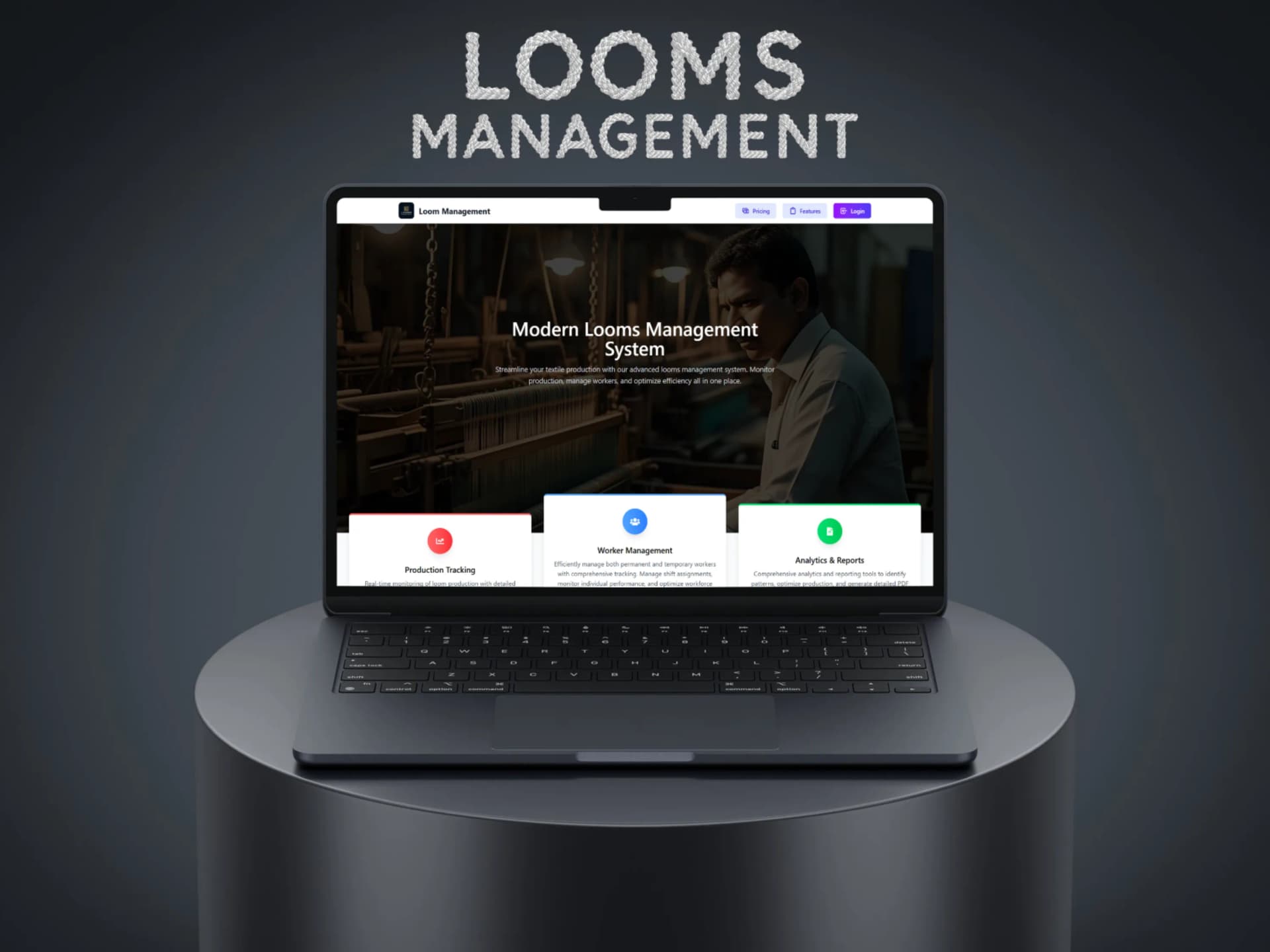
Technology Stack
Overview
Textile manufacturing in Surat — one of India's largest textile hubs — runs largely on manual registers. Loom workers are paid per meter of fabric produced, not by time. Tracking which worker produced how many meters on which machine, across which quality type, in which shift, is a multi-variable problem that small manufacturers solve with paper records and a lot of trust.
This system was originally built for a single manufacturer with 40 looms and 60 workers. It's now deployed as a SaaS product serving 8 textile businesses in Surat, each running their own independent instance with their own workers, machines, and quality types.
The Problem
Meter-based salary calculation complexity: Workers are paid based on meters of fabric produced. The rate varies by quality type (thicker fabric = higher rate), by machine type, and by shift. Calculating monthly salaries manually took 2 full days and was error-prone.
Production visibility: Management had no real-time visibility into which machines were running, which workers were on shift, or daily production totals. End-of-day production totals were reported verbally.
Machine utilisation: With 40 looms, knowing which machines were underperforming (low meter production despite being operational) was difficult without data.
Worker productivity tracking: No baseline existed for what "good" production looked like per worker per machine per quality type. Management couldn't identify underperforming workers or machines without intuition.
The Solution
Production Entry System:
Supervisors log production at end-of-shift: worker, machine, quality type, meters produced. The system validates that the machine and worker are both assigned to that shift. Data entry takes 2 minutes per shift vs. 20 minutes for paper records.
Automated Salary Engine:
The salary calculation engine reads the month's production entries for each worker, applies the quality-type rate schedule, sums the result, deducts any advances, and produces a pay slip. A month's salaries for 60 workers are calculated in under 30 seconds.
Machine & Worker Dashboards:
Real-time dashboards show current-shift production by machine and by worker. Managers view this on their phones without entering the factory floor.
Quality Type Management:
The owner defines fabric quality types with associated meter rates. Rate changes take effect immediately for new production entries.
Architecture
Laravel 11 + Filament 3:
Service-oriented architecture with ProductionService, SalaryService, and ShiftService as core business logic containers. Filament resources for Machine, Worker, Quality Type, Production Entry, and Shift.
Salary Engine:
Pure PHP salary calculation engine with no external dependencies. Tested with PHPUnit covering all rate variation scenarios.
Multi-tenant SaaS:
Each client gets a subdomain (client.loomsmanagement.in). Database-per-tenant for complete data isolation. A central admin panel manages tenant provisioning and subscription status.
PWA:
Deployed as a PWA so supervisors can add it to their phone's home screen. Works reliably on Android mid-range phones common in Surat's manufacturing sector.
Key Implementation Details
- Designed multi-variable salary computation engine with quality-type rate schedules
- Built production entry system with shift validation and machine-worker assignment checks
- Created real-time production dashboards for machine and worker performance monitoring
- Implemented multi-tenant SaaS architecture with database-per-tenant isolation
- Built subscription billing and tenant provisioning system
- Generated PDF salary slips with production breakdown per worker
- Created machine utilisation analytics with below-average performance alerts
- Deployed as PWA for mobile-first access on factory floor
Screenshots
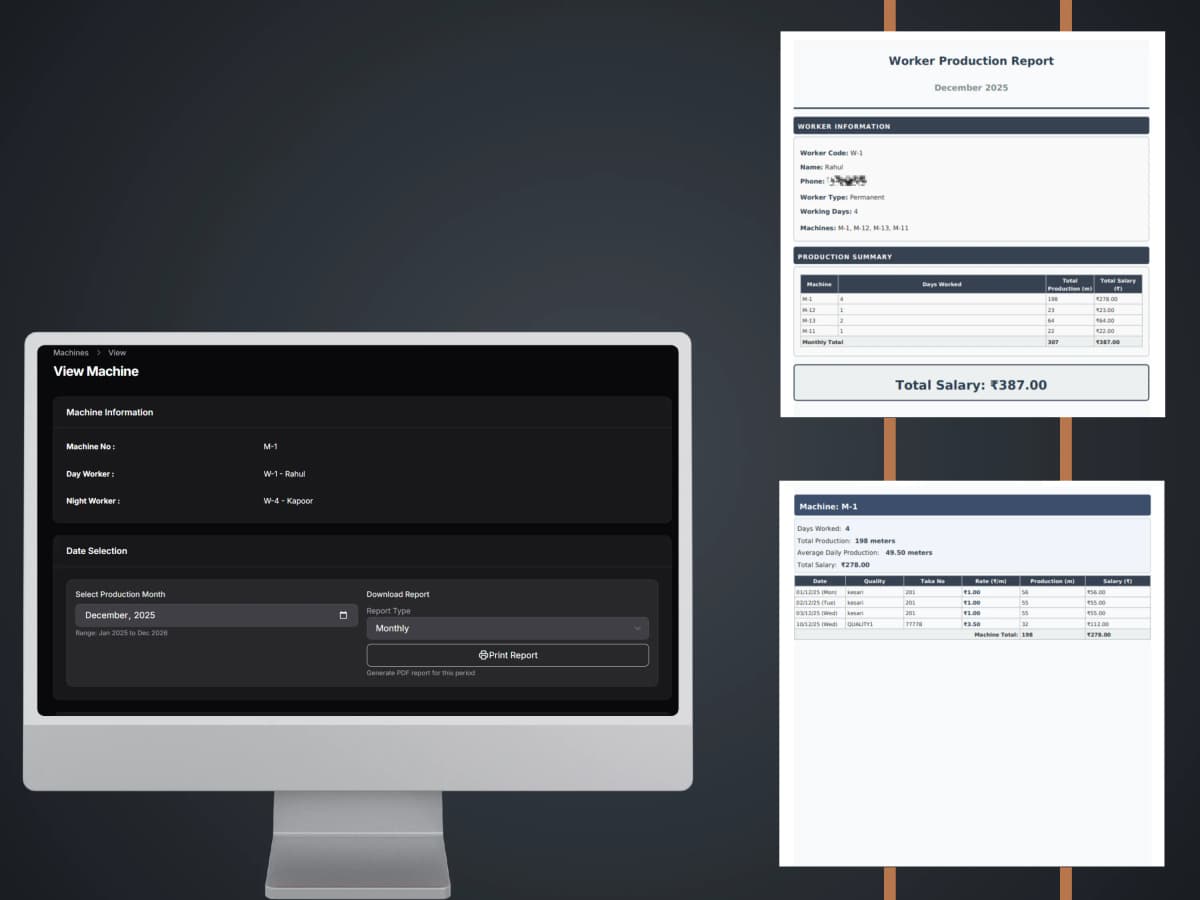
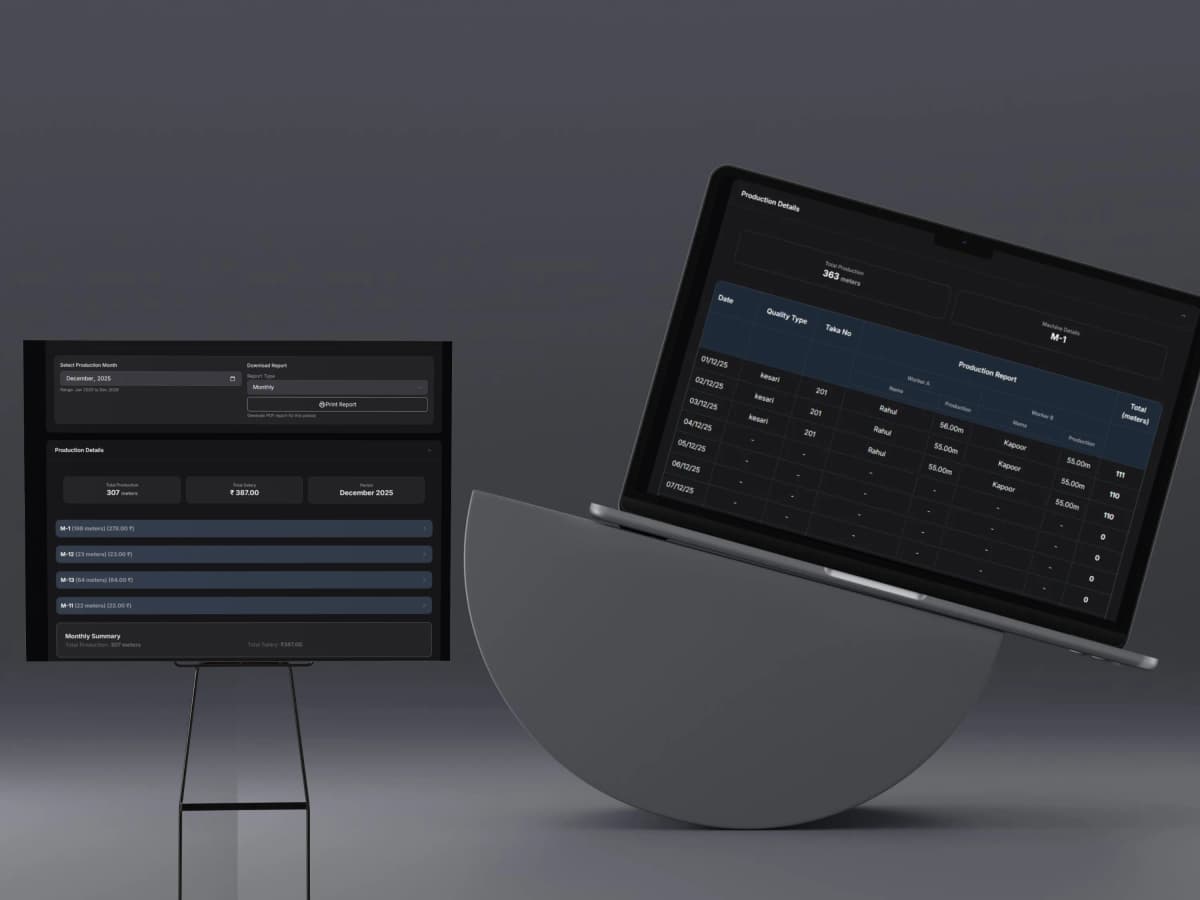
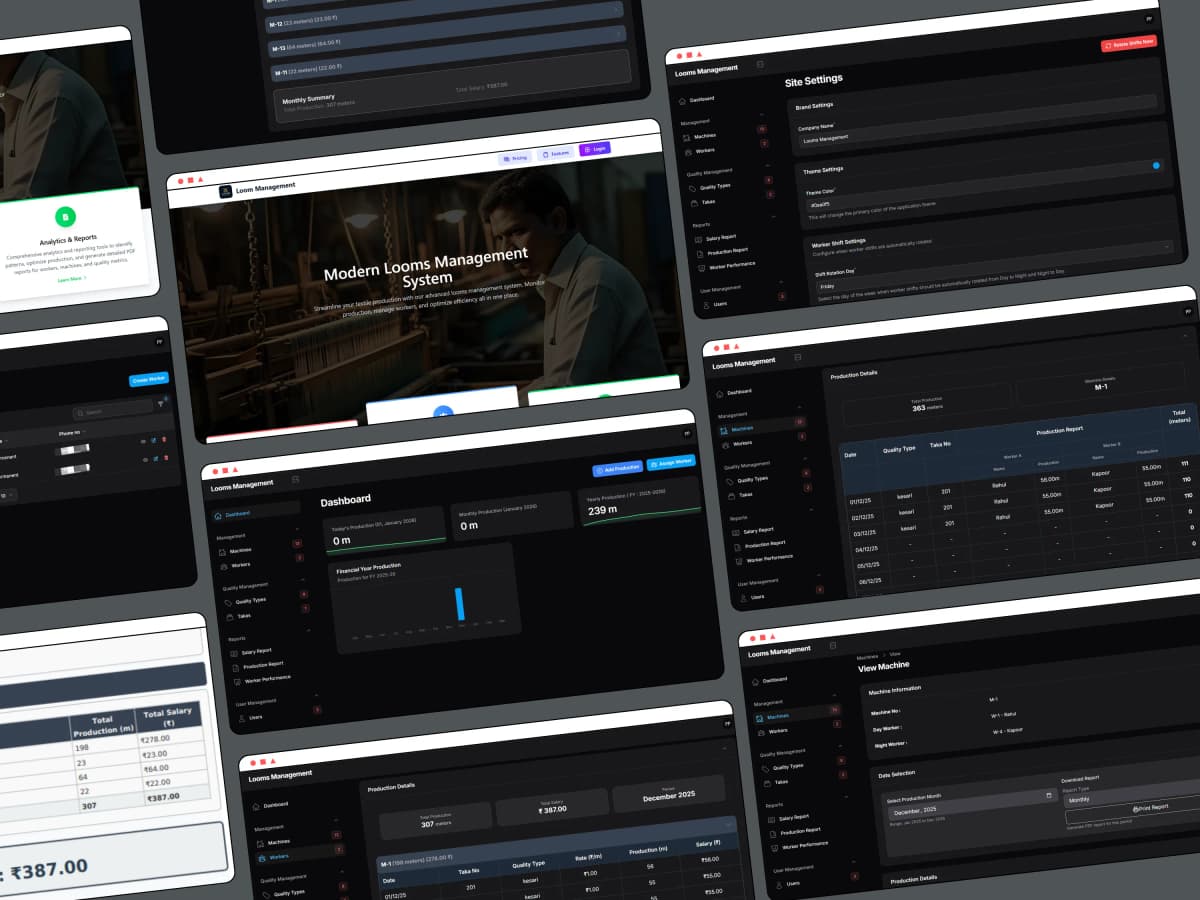
Business Impact
- Monthly salary calculation time reduced from 2 days to 30 minutes
- Salary disputes reduced by 90% due to transparent production-based calculations with audit trail
- Management gained real-time production visibility for the first time
- System deployed as SaaS to 8 additional textile manufacturers — validated as market-ready product
- Machine underperformance identification led to one manufacturer retiring 3 machines that were operating at 40% normal output
Key Engineering Challenge
The multi-tenant SaaS architecture required careful thought about data isolation. I chose database-per-tenant over schema-per-tenant because the clients' data should never be in the same MySQL database — for both security and regulatory reasons in case of future audits. The tradeoff is operational complexity (running migrations across 8 databases), which I addressed with a custom Laravel command that runs migrations on all tenant databases sequentially.